

Home » Procurement Orchestration, AI and the Future of Procurement, An interview with Roger Blumberg
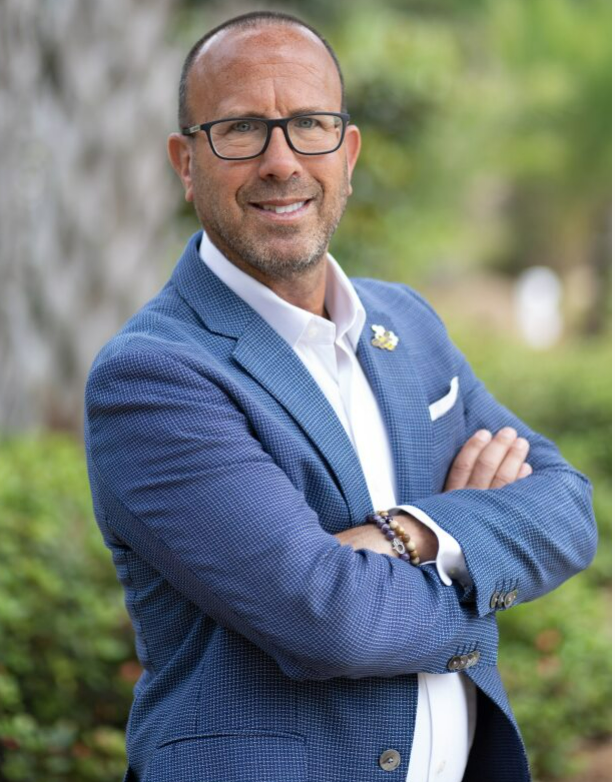
An interview with Roger David Blumberg, GM North America at Synertrade
Procurement is entering a new era.
Between AI, supply chain disruptions, tariffs, and an explosion of specialized procurement technologies, organizations are facing an increasingly complex environment.
To better understand these transformations, we spoke with Roger Blumberg, General Manager North America at Synertrade, about the evolution of procurement, the rise of procurement orchestration, and what the future holds for procurement teams.
“I’m responsible for the full lifecycle of customers and prospects — from acquisition to onboarding and long-term success. The goal is not just to win customers, but to make sure they are truly delighted with the solutions and the services we provide.”
Roger Blumber, GM Synertrade NA
As General Manager for North America, Roger oversees the entire customer lifecycle — from initial engagement to long-term success.
His role goes beyond sales and marketing. It also includes ensuring that customers successfully implement and adopt procurement solutions, ultimately becoming strong advocates for the platform.
However, supporting customers today requires a highly tailored approach. Procurement organizations differ widely in terms of digital maturity, industry constraints, geographic footprint, supplier ecosystems, and risk exposure.
A global manufacturer with thousands of suppliers, for example, does not face the same procurement challenges as a fast-growing technology company or a regional retailer.
As a result, procurement platforms must go far beyond standardized solutions and instead support highly integrated, flexible ecosystems capable of adapting to each organization’s specific sourcing processes, data environments, and strategic priorities. We are no longer in a one size fits all world.
One of the major themes emerging in discussions with procurement leaders is procurement orchestration.
Over the past few years, the number of specialized procurement tools has grown rapidly. These tools cover areas such as:
While these solutions provide valuable insights individually, their real value emerges when they are integrated into a broader procurement decision framework.
“Customers are asking us to act as the orchestration layer that integrates third-party tools — risk tools, sustainability platforms, diversity solutions or AI plugins — and make their data actionable within sourcing decisions.”
Roger Blumber, GM Synertrade NA
Without this orchestration layer, companies risk investing in multiple technologies that remain disconnected from their core sourcing processes.
The goal is not to add more data to the equation. It’s to make the right data actionable at the right moment and turn it into a decision, not a dashboard.

The challenge is not only collecting data, but making it actionable in real time.
For example, supplier risk platforms can provide valuable alerts about financial instability, geopolitical disruptions, or natural disasters affecting suppliers.
But if this information remains isolated in a separate tool, its impact on procurement decisions is limited.
“Having risk information is great, but if it’s not embedded in your sourcing decisions in real time, you’re missing a huge opportunity.”
Roger Blumber, GM Synertrade NA
With integrated procurement orchestration, such insights can directly trigger operational actions — such as automatically identifying alternative suppliers when disruptions occur.
Beyond orchestration, procurement leaders are increasingly asking for advanced scenario modelling capabilities.
Global trade dynamics, tariffs, supply shortages, and geopolitical tensions are forcing companies to rethink sourcing strategies more frequently than ever.
Procurement teams must now answer questions such as:
What happens if we shift sourcing to another region?
What is the cost impact of tariffs on our supply base?
How do risk, sustainability, and price interact in supplier selection?
“Procurement is being asked to run far more ‘what-if’ scenarios than ever before — and they need answers in real time.”
Roger Blumber, GM Synertrade NA
These decisions involve multiple variables — risk exposure, tariffs, sustainability requirements, diversity objectives, and cost competitiveness — making manual analysis increasingly impractical.
Looking ahead, Roger sees a major shift in procurement roles.
Traditional transactional procurement activities will increasingly be handled by automation and AI, while procurement professionals move toward technology-driven and strategic roles.
This transformation is already visible in many organizations, where new roles are emerging within procurement teams:
In some companies, procurement departments are even building their own internal procurement technology teams, responsible for selecting tools, integrating solutions, and developing AI agents.
“Anything non-strategic will increasingly be handled by technology. Procurement teams will either be enabling technology or focusing on strategic work.”
Roger Blumber, GM Synertrade NA
"Procurement has always managed risk. What’s changing is the expectation: not just to manage it, but to anticipate it — and turn uncertainty into informed decisions.”
Roger Blumber, GM Synertrade NA
This evolution is also changing procurement’s role within the broader organization.
Historically, technology decisions were largely managed by IT departments. Today, procurement teams are increasingly becoming technology drivers themselves, especially when it comes to ProcureTech solutions.
According to Roger, some large organizations now maintain dedicated procurement technology teams, responsible for defining technology roadmaps and implementing new solutions.
This shift elevates procurement from a transactional function to a strategic innovation hub.
Looking ahead: growth and industry engagement in North America
For Synertrade in North America, the coming months will be marked by continued expansion.
The region is seeing strong momentum, with new customers joining the platform and existing clients expanding their adoption of procurement solutions.
At the same time, the Synertrade team will remain actively involved in major industry events, including:
These events provide opportunities to discuss the future of procurement with leading CPOs and procurement innovators.